
Natural slate roofing is one of the longest-lasting roof coverings you can specify: a well-laid slate roof usually lasts 100 years or more, and premium Welsh and Spanish slate often reaches 120 to 150 years. In most cases it is the fixings, not the slate itself, that wear out first. That combination of longevity, weather resistance and looks is why architects, conservation officers and experienced roofers keep coming back to it across the South East.
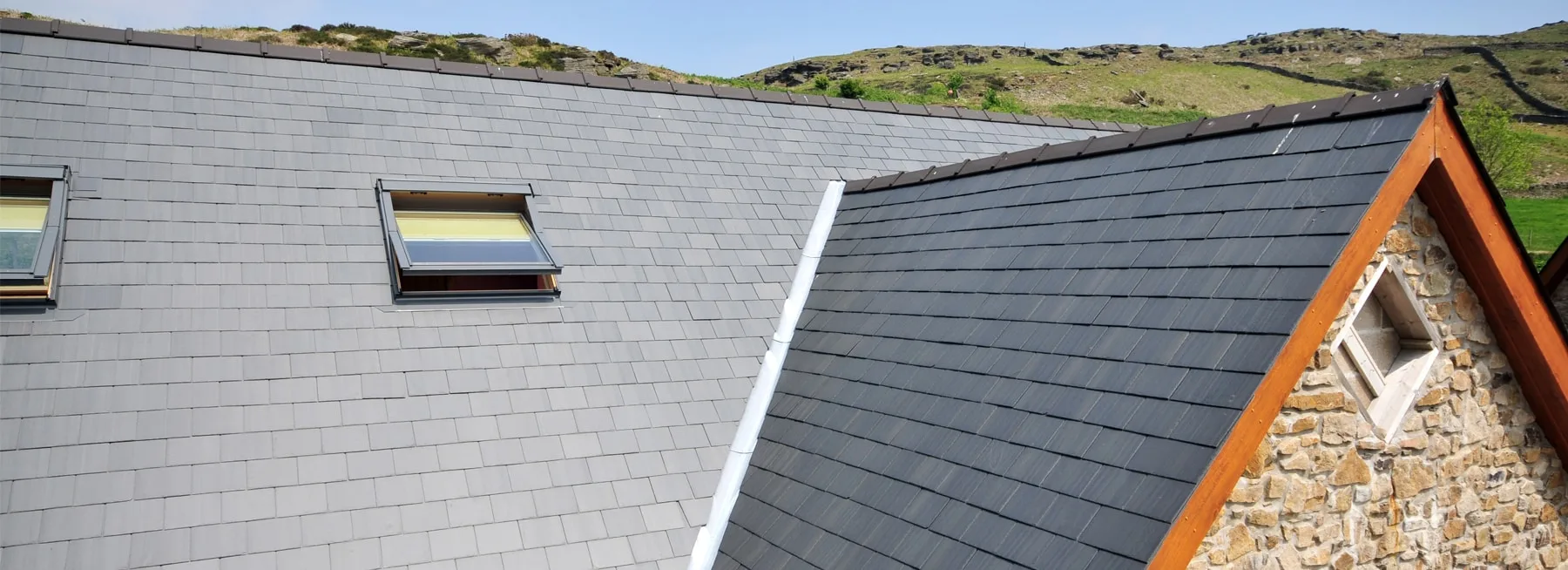
Below we cover how long slate really lasts, how natural slate compares with fibre-cement, the honest disadvantages, and what to check when you are sourcing it for a job in Sussex or Kent.
How long do slate roofs last?
Natural slate is a metamorphic stone, so its performance is built into the material rather than added as a coating. High-quality slate that has been correctly specified and installed comfortably passes 100 years. Welsh slate such as Penrhyn and Ffestiniog can last well beyond that, while good Spanish slate typically gives 100 to 150 years. Lower-grade imports are a different story and may only manage 50 to 75 years, which is exactly why grading and source matter.
The catch is that the whole roof is only as durable as its weakest part. Nails and other fixings often give out at around 60 to 80 years, so many full strip-and-re-lay jobs happen at 70 to 100 years even when the slate itself is still sound. Specifying the right fixings from the start, and re-using slate where it is genuinely reusable, is part of getting that lifespan on paper into a real roof.
Built for the British climate
Natural slate suits the UK’s mix of frost, wind-driven rain and long damp spells. It resists water absorption, does not warp or fade in UV, and holds its structural integrity through decades of freeze-thaw cycles. Unlike some manufactured coverings, it does not rely on a surface finish that degrades over time. Once it is on, a slate roof needs very little attention, which keeps call-backs down and gives homeowners a genuine fit-and-forget covering.
Natural vs fibre-cement slate
We stock both natural slate and fibre-cement slate, and the right choice depends on the job and the budget. Fibre-cement slates are lighter, cheaper per square metre and quick to lay, which makes them a sensible option on new builds, extensions and rental properties where the budget is tight. Natural slate costs more up front but lasts far longer and keeps its appearance because the colour and texture are in the stone, not a coating.
| Feature | Natural slate | Fibre-cement slate |
|---|---|---|
| Typical lifespan | 100 years or more | Around 30 to 60 years |
| Material | Natural metamorphic stone | Cement, fibres and fillers, coated |
| Appearance over time | Colour and grain stay in the stone | Surface coating gradually weathers |
| Weight | Heavier; structure must suit | Lighter and more uniform |
| Up-front cost | Higher | Lower |
| Best for | Heritage, conservation, premium homes | Budget-led new builds and extensions |
Fibre-cement is a manufactured product, so slates are very consistent in size and thickness, which speeds up laying. Natural slate needs sorting and grading on site, but rewards it with a depth and character no manufactured slate quite matches. Brands like Cembrit and Marley cover the fibre-cement side, and we can talk both through against the property and the budget.
The honest disadvantages of a slate roof
Slate is an excellent covering, but it is not the answer to every job, and it pays to be straight with clients about the trade-offs.
- Cost. Natural slate carries a higher material and labour cost than concrete tiles or fibre-cement. The lifecycle cost stacks up well over 100 years, but the up-front figure is real and needs to be quoted honestly.
- Weight. Slate is heavy. The roof structure has to be able to carry it, and on a re-cover you may need to check the timbers rather than assume the old roof’s loading transfers across.
- Skilled fixing. Slating is a craft. Even courses, correct headlap, sound nailing and clean detailing at ridges, hips and valleys all take an experienced roofer. A poorly laid slate roof will let you down long before the slate does.
- Grading and waste. Natural slate varies, so some sorting and cutting on site is normal. Buying from a supplier who grades properly keeps that waste down.
Consistency and complete systems on site
From an installation point of view, consistency is everything. Properly graded and sized slate lets roofers keep even courses, achieve clean lines and work efficiently across the roof. Variations in thickness or sizing slow the job and show in the finished result, so sourcing from a specialist who grades accurately reduces wastage and protects the finish.
A slate roof is also more than the slates. It relies on the right battens, underlay, fixings and matching accessories such as ridges and hips, all working together. We supply slate as part of a complete pitched roofing system so the components are compatible, which is the practical side of following BS 5534, the code of practice for slating and tiling. Natural slate is usually laid at pitches of roughly 20 degrees or steeper, with the exact minimum depending on slate size, headlap and how exposed the roof is.
Sourcing natural slate in Sussex and Kent
Brian Gow Roofing Supplies has been a family-run roofing merchant since 1996, and slate is one of the lines we know best. We cover Kent, Surrey and Sussex, holding natural and fibre-cement slate along with the fixings, underlay and dry-fix accessories that go with it, and we deliver across the South East or you can collect from a depot.
Because we deal with trade and homeowners every day, the advice is practical rather than salesy: the right slate for the property, matched components, and a realistic view of cost and lifespan before anyone commits. If you are pricing a job near the coast or picking up locally, our Hailsham roofing supplies depot carries slate and the rest of the pitched-roofing range.
For a price on natural or fibre-cement slate, tell us the property and rough quantities and get a quote, or call the branch and we will sort the specification with you.
Frequently asked questions
What are the disadvantages of a slate roof?
The main drawbacks are cost, weight and the skill needed to fit it. Natural slate costs more up front than concrete tiles or fibre-cement, it is heavy so the structure must be able to carry it, and it needs an experienced roofer to lay even courses and detail it correctly. Get those right and it repays the investment for a century or more.
How long do slate roofs last?
A well-laid natural slate roof usually lasts 100 years or more, with premium Welsh and Spanish slate reaching 120 to 150 years. The fixings often wear out before the slate, so many roofs are stripped and re-laid at around 70 to 100 years even when much of the slate can be re-used.
How often should a slate roof be replaced?
A good natural slate roof rarely needs full replacement inside 80 to 100 years. Long before that, the usual work is repointing ridges, replacing slipped or cracked slates and renewing failing fixings or flashings. A full strip-and-re-lay tends to happen when the nails or battens give out rather than the slate.
What is the difference between natural and fibre-cement slate?
Natural slate is quarried stone that keeps its colour and lasts 100 years or more. Fibre-cement slate is a manufactured board of cement and fibres with a coloured coating, lighter and cheaper but with a shorter life of roughly 30 to 60 years. Natural slate suits heritage and premium work; fibre-cement suits tighter budgets.
How much does it cost to replace a slate roof in the UK?
Cost depends on roof size, pitch, access and whether you use natural or fibre-cement slate, so figures vary widely. Natural slate sits at the higher end because of material and labour. For a sense of scale before you price a job, this guide to typical UK new roof costs breaks the options down, and we can quote the materials once you know the plan.