
The main difference between clay vs concrete roof tiles comes down to longevity, weight and colour. Clay roof tiles are fired from natural clay and routinely last 60 to 100 years or more, with the colour running right through the material so it never really fades. Concrete roof tiles are cheaper and heavier, typically last around 40 to 60 years, and their surface colour softens under UV over time. Concrete usually wins on upfront cost; clay wins on lifespan, weight and long-term looks, which is why it is so often the right choice on older and heritage properties.
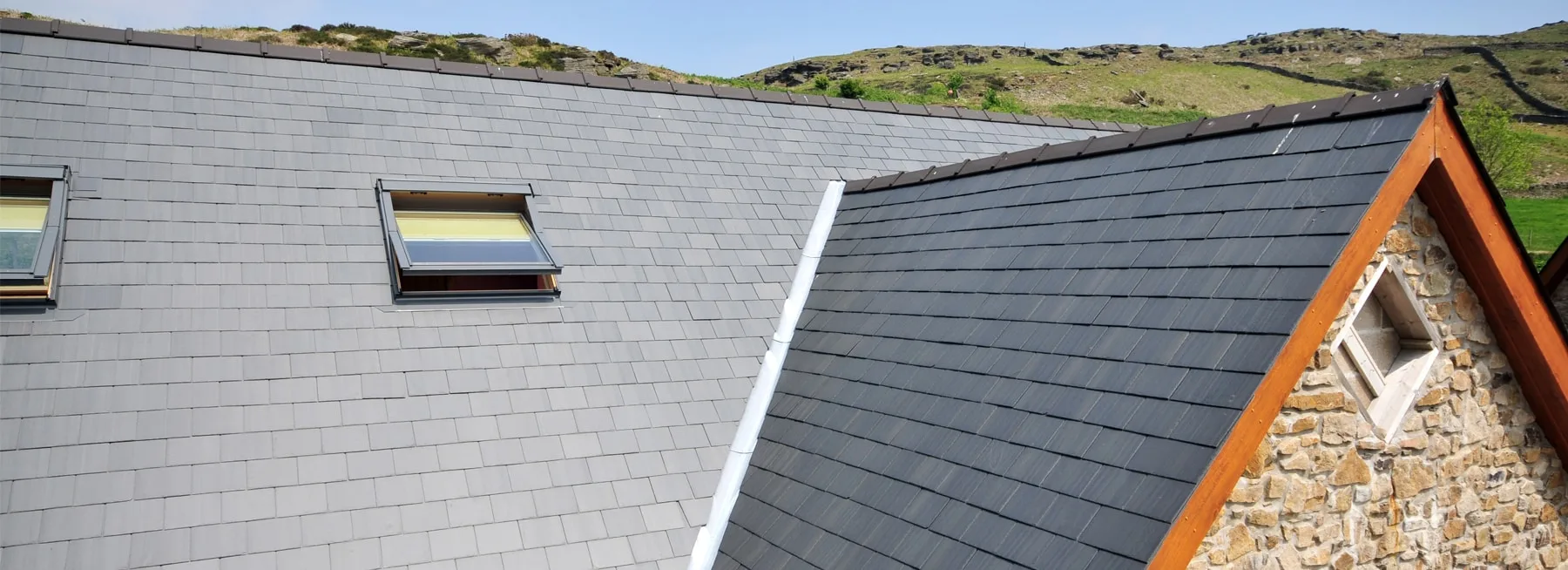
Clay vs concrete roof tiles at a glance
Here is the head-to-head, so you can see where each material earns its place before we get into the detail.
| Feature | Clay roof tiles | Concrete roof tiles |
|---|---|---|
| Typical lifespan | 60 to 100+ years, often outlasting the roof structure | Around 40 to 60 years |
| Weight | Lighter per square metre on a like-for-like tile | Noticeably heavier; needs a stronger roof structure |
| Colour | Through-fired natural colour that holds for the life of the tile | Pigmented surface that can fade under UV over the years |
| Cost | Higher upfront material cost | Lower upfront material cost |
| Minimum pitch | Around 35° for plain tiles; interlocking clay designs go lower | Interlocking profiles available down to low pitches |
| Best use | Period, listed and conservation properties; long-life new builds | Budget-conscious projects and large roof areas |
Lifespan: do clay roofs last longer than concrete?
Yes. Clay is the more durable of the two by a clear margin. A well-laid clay roof commonly lasts between 60 and 100 years, and plenty of Sussex roofs are still weathertight well past the century mark. Concrete tiles generally give around 40 to 60 years of service. Most manufacturers guarantee both materials for roughly 30 years, so the extra life you get from clay is the difference between one re-roof in a lifetime and possibly two.
One point worth stressing: the tile is only half the story. The underlay, battens and fixings beneath it age too, and a clay roof will usually need its membrane and battens renewed long before the tiles themselves give out. That is why we advise trade and homeowners to specify quality throughout the whole system, not just the visible surface.
Weight and your roof structure
Concrete tiles are the heavier option, and that has real consequences. A concrete tile roof puts more load on the rafters, wall plates and walls, which matters if you are re-covering an older building that was originally built for lighter clay or slate. Swapping like for like is straightforward. Switching from clay to concrete on an old roof can mean a structural engineer needs to check the timbers first. Clay’s lighter weight is one reason it suits period properties, where the existing structure was never designed to carry modern concrete.
Colour: why concrete fades and clay does not
This is the difference most people notice from the pavement after fifteen or twenty years. Clay gets its colour from the natural clay itself, fired at high temperature so the colour is baked through the whole tile. It does not rely on a coating, so it holds its tone for the life of the roof and often mellows attractively rather than fading.
Concrete tiles are coloured with pigment, and while good tiles carry that pigment through the body as well as on the surface, the exposed face is what the weather attacks. Over time UV and rain soften the surface colour, and older concrete roofs can look patchy or washed out. Manufacturers use acrylic coatings and better pigments to slow this down, but a concrete tile will still shift more than a comparable clay one.
Cost: are clay roof tiles more expensive than concrete?
Generally yes, clay costs more per tile than concrete at the point of purchase. Concrete is the value option and is hard to beat on a tight budget or a large roof area. The picture changes when you look at the whole life of the roof. Because clay can last roughly twice as long, the cost spread over the years it serves can work out competitively, especially once you factor in the labour of a second re-roof. For an accurate figure on either material for your project, it is best to get a quote based on your actual roof area and tile choice.
Minimum roof pitch for clay tiles
Pitch decides which tiles you can even use. The minimum roof pitch for clay plain tiles is generally around 35 degrees, though some single-camber tiles can go down to about 30 degrees with an increased headlap, depending on the manufacturer. Interlocking clay tiles cope with shallower roofs, and certain proprietary designs with anti-capillary features are approved for pitches as low as the mid-teens, provided the manufacturer has the evidence to back it. Concrete interlocking profiles are also widely available for low pitches.
Whatever you choose, the fixing specification follows BS 5534, the British Standard for slating and tiling, which sets out how tiles must be laid and secured for your pitch and exposure. Always check the individual tile’s minimum pitch against the manufacturer’s data sheet rather than assuming. If you are unsure, our counter staff can match a tile to your pitch from our pitched roofing range.
Planning, listed buildings and conservation areas
On period, listed and conservation-area properties, clay is usually the sympathetic choice and is often what a conservation officer will expect to see. Handmade clay tiles in particular match the character and irregular texture of older Sussex and Kent roofs in a way concrete cannot. If your property is listed or sits in a conservation area, check with your local authority before you order, because the material and even the specific tile may be conditioned. Concrete is fine for most standard homes but rarely the right answer where heritage appearance matters.
How to tell clay from concrete tiles on your own roof
Not sure what you already have? Here is how to tell clay from concrete tiles without getting on the roof:
- Colour and fading: an even, warm colour that has held up well points to clay. A grey, patchy or faded surface, especially with a slightly rough texture, usually means concrete.
- Edges and finish: clay tiles have a smoother, sometimes glazed or sanded face and crisper edges. Concrete tends to look coarser, with a granular surface.
- Weight and sound: a spare clay tile is lighter for its size and rings with a sharper note when tapped; concrete sounds duller.
- Underside: if you can inspect a loose tile, clay is denser and more uniform through the body, while concrete looks like fine aggregate.
If you bring a sample tile into one of our depots, the team can identify it and match a replacement. Our Hailsham depot and our other branches across Sussex hold both clay and concrete, so matching an existing roof is usually straightforward.
Which should you choose?
If budget is the deciding factor, or you are covering a large modern roof, concrete is the sensible, dependable option. If you want the longest life, the lightest load on the structure, colour that lasts, or a tile that suits a period or conservation property, clay is worth the extra. We stock both, including Marley concrete tiles and handmade clay, so we can supply whichever fits your roof and your budget rather than pushing one over the other.
Talk to a merchant who knows tiles
Brian Gow Roofing Supplies has been supplying roofers, builders and homeowners across Kent, Surrey and Sussex since 1996. Bring us your pitch, your existing tile or your plans and we will help you specify the right material first time. Find your nearest depot, visit the counter, or get a quote to compare clay and concrete for your roof.
Frequently asked questions
What are the disadvantages of clay roof tiles?
The main drawbacks are cost and pitch. Clay tiles cost more per tile than concrete, so the upfront material bill is higher. Plain clay tiles also need a steeper roof, generally around 35 degrees, so they do not suit every low-pitch roof. Older or poor-quality clay tiles can also be more prone to frost damage, though modern clay is fired to resist it.
Are concrete roof tiles better than clay?
Concrete is better on two counts: price and low-pitch flexibility. It costs less per tile and interlocking profiles suit shallower roofs. Clay wins on lifespan, weight and colour retention, and is the stronger choice for period and conservation properties. Neither is simply better; the right answer depends on your budget, roof structure, pitch and whether appearance and longevity matter most.
How do I know if I have clay or concrete roof tiles?
Look at colour, texture and weight. Clay holds an even, warm colour and has a smoother, denser face with crisp edges. Concrete looks coarser and greyer and often fades or goes patchy with age. A spare clay tile is lighter and rings sharply when tapped, while concrete sounds dull. Bring a loose tile into one of our depots and we will identify it for you.
Do clay roofs last longer than concrete?
Yes. Clay roof tiles commonly last 60 to 100 years or more, while concrete tiles typically give around 40 to 60 years. Both are usually guaranteed for about 30 years by the manufacturer. Bear in mind the underlay, battens and fixings underneath will normally need renewing before good clay tiles wear out, so the whole system matters, not just the tile.
Are clay roof tiles more expensive than concrete?
Usually, yes. Clay costs more per tile than concrete at the point of purchase, which makes concrete the budget choice for large roofs. Over the life of the roof the gap narrows, because clay can last roughly twice as long and may save you a full re-roof. For an accurate comparison on your project, ask us for a quote on both materials.
What is the minimum roof pitch for clay tiles?
For clay plain tiles the minimum pitch is generally around 35 degrees, with some single-camber tiles going down to about 30 degrees. Interlocking clay tiles work on shallower roofs, and certain proprietary designs are approved for pitches into the mid-teens. Always check the specific tile’s data sheet, as fixing must follow BS 5534 for your pitch and exposure.