
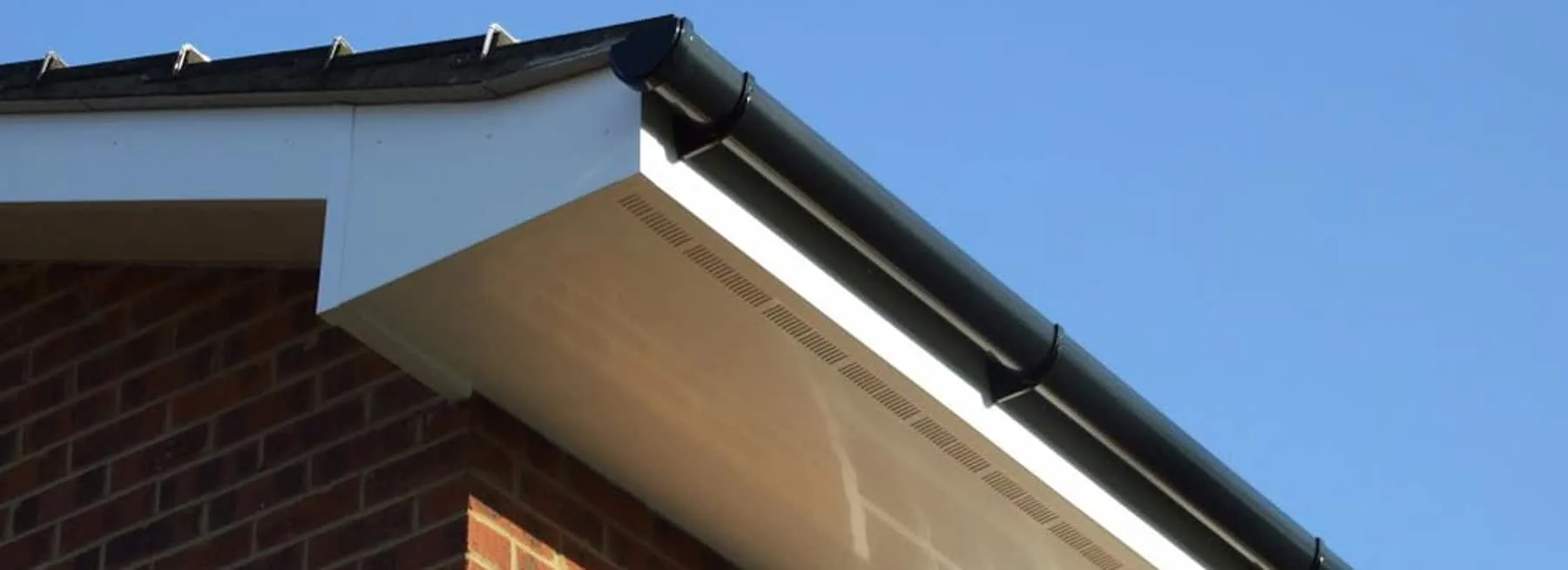
A dry verge system is a set of mechanically fixed caps, or units, that clip and screw along the gable edge of a pitched roof in place of bedded mortar. Each unit locks over the edge tile and the outer batten, sealing the verge against wind, rain and pests while holding the perimeter tiles down. Because the caps are fixed with screws or clips rather than relying on mortar, they will not crack or wash out, and they need almost no maintenance for the life of the roof.
What is a dry verge system?
The verge is the sloping edge of a roof at each gable end, where the tiles overhang the wall. For decades this edge was finished with a bed of sand and cement mortar, sometimes with an undercloak below it. A dry verge does the same job without any wet trade. A row of interlocking plastic units runs up the verge, one per tile course, each one clipping over the tile and screwing down into the batten below.
The units come as a kit: verge caps for the main run, a ridge end cap to close the top, and an eaves closure at the bottom. Most modern systems are “universal”, meaning one profile suits a range of concrete and clay tile shapes, so you rarely need a tile-specific part. This is the same family of products as dry ridge and dry hip, and together they are known as dry fix roofing.
You will hear it called dry verge, dry-fix verge or mechanically fixed verge. They all mean the same thing: the tile perimeter is held by a fixing you can point to, not by mortar that may or may not still be doing its job in twenty years.
Why dry verge is now the standard for new roofs
This is not just fashion. It follows a change in the British Standard for slating and tiling. BS 5534 was revised in 2014, and one of the headline changes was that bedding mortar no longer counts toward resisting wind uplift. In practice that means the tiles along a verge, ridge or hip have to be mechanically fixed. You can still use mortar for appearance, but it must be backed up by clips or a dry system, because on its own it no longer satisfies the standard.
A second standard, BS 8612, was published in 2018 to sit alongside it. It is the product specification for dry-fixed ridge, hip and verge systems, and it defines how these products should be tested for wind load and performance. Before BS 8612 there was no agreed test, so quality varied. Now a specifier can check that a dry verge has been tested to the right standard for the exposure of the site.
The upshot is simple. For new work and re-roofs, a dry verge system is effectively what is expected, because it is the straightforward way to meet the fixing requirements of BS 5534 at the gable. Our counter staff have been advising trade and homeowners on these fixing rules since well before the changes bedded in, and we stock verge to match the tiles we sell for pitched roofing.
Dry verge vs mortar
The dry verge vs mortar question comes up on almost every re-roof. Mortar is cheap on materials and looks traditional when fresh, but it is a wet trade that fails predictably at the edge of a roof. Here is how the two compare.
| Point | Dry verge system | Mortar verge |
|---|---|---|
| Fixing | Mechanically screwed or clipped to the batten | Bedded in sand and cement, no mechanical hold on its own |
| Wind resistance | Tested to BS 8612; holds tiles down at the edge | Not counted toward wind uplift under BS 5534 since 2014 |
| Cracking and repointing | None; will not crack or fall out | Cracks and drops out over years, needs repointing |
| Weather to install | Fitted in most conditions, no curing | Should not be laid in frost or heavy rain |
| Maintenance | Effectively none for the life of the roof | Ongoing inspection and repair |
| Pest and bird entry | Closes the verge gap | Gaps open up as mortar fails |
Mortar still has its place on some conservation and heritage jobs where the look has to match exactly. For most work, though, a dry verge is the lower-maintenance and better-performing choice.
What colours do dry verge caps come in?
Dry verge caps are made in a small set of standard colours so they can be matched to the tile and the roofline. The four you will see most often are black, brown, grey (slate grey) and terracotta. Black and grey suit slate and dark concrete tiles, brown works with brown and buff tiles, and terracotta is chosen for clay and red concrete tiles. The plastic is UV-stabilised so the dry verge colours hold up in sunlight rather than fading quickly.
Because dry verge sits next to the fascia, bargeboard and guttering, it makes sense to pick the verge colour at the same time as the rest of the PVC roofline. Ask at the counter and we will help match the cap to the tile you are laying.
Can you fit dry verge to an existing roof?
Yes. Dry verge can be retrofitted to an existing roof, and it is a common upgrade when a mortar verge has started to crack and drop out. The old mortar is raked out and removed, the outer battens are checked and replaced if they are soft or too short, and the dry verge units are then screwed down course by course. It is a tidy job that does not need the whole roof stripped, and it usually costs less than repointing the verge every few years.
The one thing to check first is the batten. Dry verge needs sound timber to fix into, so if the battens at the gable are undersized or rotten they are replaced as part of the work. On a roof in reasonable condition, a retrofit dry verge gives you a maintenance-free edge without touching the field tiles.
Buying dry verge in Sussex, Kent and Surrey
We keep dry verge kits and the matching plastic roofline in stock across our depots, alongside the tiles they finish. Trade and homeowners can collect from the counter or have materials delivered across Sussex, Kent and Surrey from our main stock-holding depot at Haywards Heath. If you tell us the tile and the length of the verge, we will work out the units, ridge end caps and closures you need. Get a quote or call your nearest branch and we will sort it.
Frequently asked questions
What is a dry verge system?
A dry verge system is a run of interlocking plastic caps fixed along the gable edge of a pitched roof instead of mortar. Each unit clips over the edge tile and screws into the batten, sealing the verge and holding the perimeter tiles against wind, rain and pests without any wet trade.
Is dry verge better than mortar?
For most roofs, yes. Dry verge is mechanically fixed, so it will not crack or wash out like mortar, needs no repointing and meets the wind-fixing requirements of BS 5534. Mortar can still be used for a traditional look on heritage work, but it must be backed up by mechanical fixings.
Are dry verge systems any good?
They are the current standard for gable edges on new and re-roofed pitched roofs. Quality dry verge is tested to BS 8612 for wind performance, lasts the life of the roof and removes the ongoing maintenance a mortar verge needs. Buying a tested system from a proper merchant is what matters.
Do dry verge caps come in different colours?
Yes. Dry verge caps are usually made in black, brown, grey and terracotta so they can be matched to the tile and roofline. Black and grey suit slate and dark tiles, brown suits buff and brown tiles, and terracotta is chosen for clay and red concrete tiles.
Can you fit dry verge to an existing roof?
Yes. Dry verge is often retrofitted where a mortar verge has cracked. The old mortar is removed, the gable battens are checked and replaced if needed, and the units are screwed down course by course. It does not need the roof stripping and usually costs less than repeated repointing.
How are dry verge units fixed?
Each dry verge unit is mechanically fixed, screwed or clipped down onto the outer roofing batten, with each cap interlocking with the one below it. A ridge end cap closes the top of the run and an eaves closure finishes the bottom, giving a continuous, screwed-down edge rather than a bed of mortar.